The 10-Year Treasury Is Back Above 5%. Why That Matters More Than a One-Day Stock Move
The Federal Reserve gets most of the headlines, but the bond market may be sending the more important message for households and businesses right now.
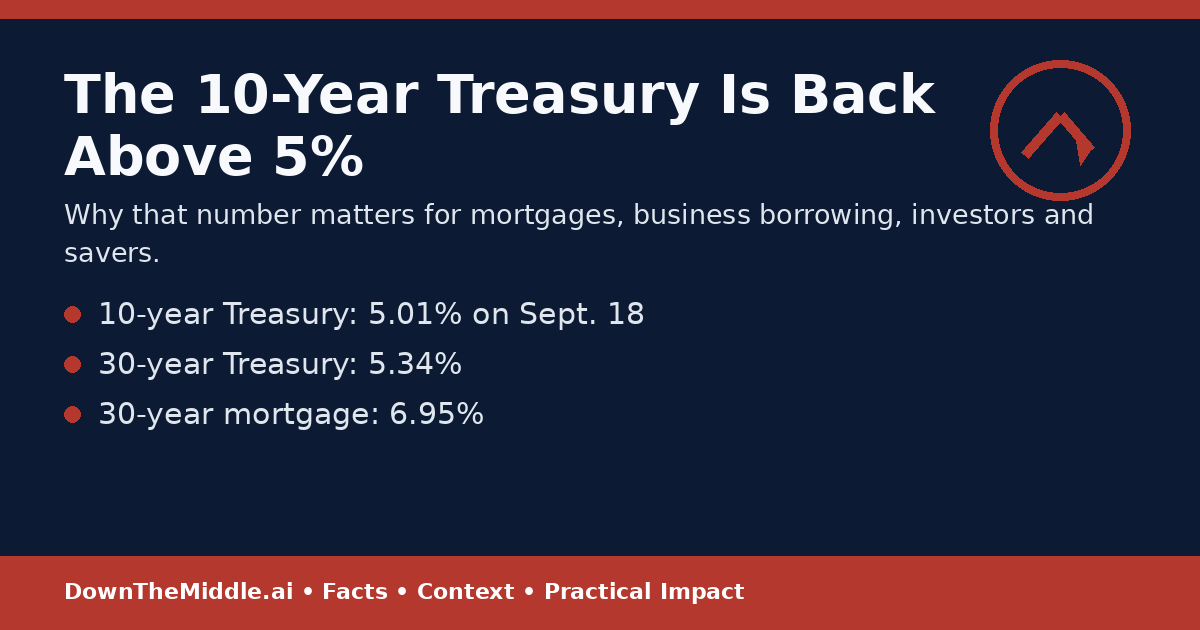
The Federal Reserve's latest H.15 release shows the 10-year Treasury yield at 5.01% on September 18. The 30-year yield stood at 5.34%. Those are not just numbers for bond traders. They help shape borrowing costs across the economy.
Why 5% matters
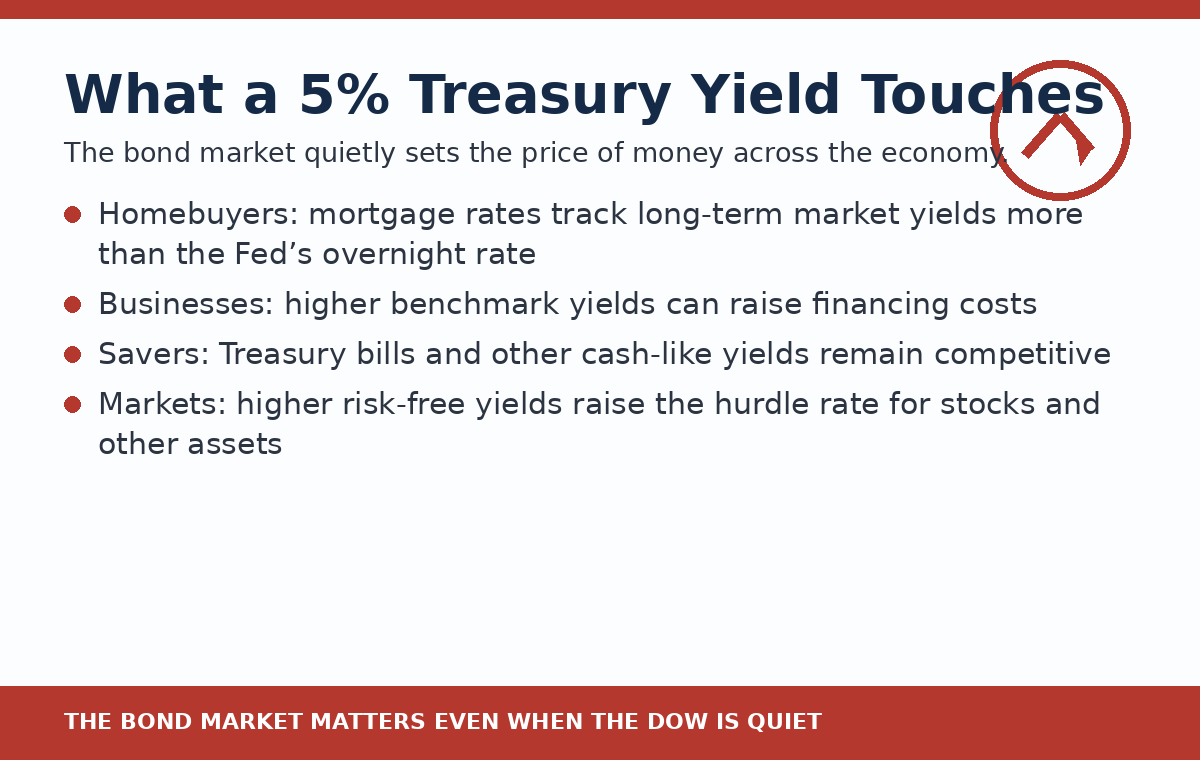
Treasury securities are generally treated as the benchmark "risk-free" interest rate in U.S. markets. When investors demand a higher return to hold a 10-year Treasury, many other borrowers must also pay more to attract capital.
That does not mean a 5.01% Treasury automatically produces a specific mortgage or corporate-loan rate. Credit risk, duration, market conditions and lender margins matter too. But higher Treasury yields raise the baseline.
Homebuyers are already seeing the effect
Freddie Mac reported an average 30-year fixed mortgage rate of 6.95% for the week ending September 17, up from 6.76% the prior week and 6.26% a year earlier.
The Fed does not directly set mortgage rates. That distinction is important. Mortgage pricing is more closely connected to longer-term bond yields and expectations about inflation and future rates. So even after the Fed's September 16 quarter-point increase to a 3.75%–4.00% target range, the 10-year Treasury is the number worth watching if you are thinking about buying or refinancing a home.
There is another side: savers get paid more
Higher market rates are painful for borrowers, but they can be useful for savers. Treasury bills, money-market funds, CDs and high-yield savings products can remain comparatively attractive when short- and intermediate-term market yields stay elevated.
For investors, higher Treasury yields also change the comparison between stocks and safer assets. If a government security offers a substantial yield, riskier investments have to offer a more compelling expected return to justify their volatility.
What to watch next
The next major economic checkpoints are the September employment report on October 2, September CPI on October 14, and the next Fed meeting on October 27–28.
If inflation cools and growth weakens, Treasury yields could ease even without an immediate Fed cut. If inflation remains sticky, yields near 5% may prove more durable.
The practical takeaway: if you want to understand what is happening to the cost of money, do not watch only the Dow — or only the Fed. Keep an eye on the 10-year Treasury.
Sources: Federal Reserve H.15 Selected Interest Rates, Sept. 21, 2026; Federal Reserve FOMC statement, Sept. 16, 2026; Freddie Mac Primary Mortgage Market Survey, Sept. 17, 2026; BLS October 2026 release calendar.